Online Poker in the US: California, Florida, Nevada & Arizona Guide for 2026

Online poker sites work differently depending on which state you’re logged in from. Nevada regulates it outright. California, Florida, and Arizona don’t license real-money poker sites, so most players there use offshore rooms instead – and that gap causes more confusion than any other topic in US poker.
This guide breaks down what’s actually legal where, which sites take real money from California, Florida, Nevada, and Arizona, and how bonuses, formats, and payouts work once you sit down at a table.
Top Poker Sites to Play at in the USA

















What Online Poker Means Today (Real Money, Free Play, and Formats)
Online poker today splits into three distinct paths, and mixing them up is the most common mistake new players make. Real money poker puts actual cash on the table, with rake taken from pots and tournaments. Free play and social formats let you play the same games with virtual chips, sometimes convertible to prizes, sometimes purely for practice.
The gap between these paths matters more than most sites admit. A free-play table teaches you hand ranges and position. It won’t teach you how to handle a real bad beat with real money gone.
Online Poker in California and Beyond: Three Ways to Play
Online poker in California specifically sits in an odd spot. There’s no state-licensed real-money option, but offshore rooms operate openly and social/sweepstakes sites layer in a third format that splits the difference. You get real prizes without a traditional cash deposit.
This structure shows up across most states without regulation, not just California. Formats now include:
- Fully licensed real-money cash games and tournaments (Nevada, and a handful of other states)
- Offshore real-money rooms accessible from most of the US, including California, Florida, and Arizona
- Sweepstakes-model sites using dual currencies, redeemable for cash prizes
One more shift worth knowing: online poker AI tools, like solvers and GTO trainers, now shape how hands get studied away from the table. They’re changing how serious players prepare, even though the tables themselves still run on human decisions.
Is Online Poker Legal in Your State? (California, Florida, Nevada, Arizona)
Legal status depends entirely on which state you’re in, and the four states people ask about most all land differently. Nevada regulates online poker directly. California, Florida, and Arizona don’t – which pushes most demand toward offshore rooms instead.
None of the four states criminalizes playing on an offshore site as an individual. What differs is whether a state-licensed, real-money option exists at all.
Online Poker California: Is It Legal?
Online poker California players ask about constantly has no state-licensed real-money option as of 2026. Multiple legislative attempts to regulate online poker in California have stalled, largely over disagreements between tribal gaming interests and commercial cardrooms. There’s no state law banning individuals from using offshore poker sites, so most California online poker activity happens through those rooms.
This makes online poker in California a gray-market situation rather than a fully legal or fully illegal one. Nothing on the books targets the player. The absence of state licensing just means there’s no California-regulated alternative to offshore play.
Online Poker Florida: Current Status
Online poker Florida access also runs entirely through offshore rooms. Florida’s gaming framework requires voter-approved constitutional amendments for major expansions, and online poker hasn’t cleared that bar. Florida online poker discussions come up often because of the state’s massive population, but no regulated real-money site currently operates there.
As in California, individual players face no state law prohibiting offshore poker Florida real money play. The market simply hasn’t been built at the state level.
Online Poker Nevada: Regulated and Ready
Nevada online poker is the one clear exception on this list. Nevada was among the first states to regulate real-money online poker, back in 2013, and WSOP.com operates as the state’s licensed platform. Nevada online poker also shares player liquidity with New Jersey and Michigan under a multi-state agreement, which keeps tables fuller than a single-state pool could manage alone.
If you want licensed, state-regulated online poker, Nevada is the most straightforward answer among the four states covered here.
Arizona Online Poker: What to Know
Arizona online poker has no regulated real-money framework, despite the state legalizing mobile sports betting in 2021. Online poker in Arizona hasn’t followed the same path as sports betting legislation. Arizona online poker players rely on offshore sites, same as California and Florida.
So, is online poker legal in Arizona in the sense of a regulated market? No. Is it legal to play on an offshore site as an Arizona resident? Nothing in state law says otherwise, which is why online poker Arizona traffic flows almost entirely through offshore rooms.
Key Tip
Using a VPN to access a geo-restricted real-money site is an account risk, not a legal one – most offshore rooms already accept players from California, Florida, and Arizona directly, so masking your location just adds a reason for a site to freeze your account. Skip the VPN and use a site that already welcomes your state.
Best Online Poker Sites Compared for California, Florida, Nevada, and Arizona Players
The best online poker sites for these four states are offshore rooms with strong crypto banking, big tournament guarantees, and no state-eligibility issues. Nevada players have a licensed option in WSOP.com, but California, Florida, and Arizona online poker demand runs almost entirely through the offshore market. Game variety, payout speed, and bonus structure separate the strong sites from the average ones.
- CoinPoker matches that bonus ceiling with a 150% match up to $2,000 and the widest crypto support of the group, spanning BTC, ETH, USDT, USDC, SOL, BNB, POL, and TRX, with withdrawals ranging from instant to 72 hours.
- ACR Poker leads on game variety, spreading Hold’em, PLO, PLO8, PLO5, Big O, and Stud formats with crypto payouts landing within about an hour and a 100% match up to $2,000.
- Stake.us stands apart from the rest with its sweepstakes model, offering up to 560,000 Gold Coins and $56 in Stake Cash instead of a traditional cash bonus, with crypto redemptions approved in around an hour.
The remaining rooms, Ignition Casino, Bovada, Ya Poker, BetOnline, and BC.Poker, all support multiple cryptocurrencies with payouts from near-instant to about 24 hours, and welcome bonuses ranging from a $200 match plus no-deposit cash at BC.Poker up to 100-150% matches worth $500 to $2,000 at the others.
Access Note
Nevada residents can play on WSOP.com as a state-licensed option; the offshore rooms above are the primary route for California, Florida, and Arizona.
Top 3 Online Poker Sites Reviewed
Not every poker site excels in the same areas. These reviews compare bonuses, game selection, banking, software, and overall value to help you choose the right fit.
1. CoinPoker – Best for Crypto-Native Poker
CoinPoker is built for players who already think in crypto. It runs on eight supported coins, from BTC and ETH to SOL and TRX, with crypto withdrawals landing anywhere from instant to 72 hours.

Top Features
- 150% welcome bonus up to $2,000 on a $10 minimum deposit
- Flat 33% rakeback plus CoinRewards paying out over $7m monthly across the player base
- PLO6 and other high-variant Omaha formats rarely found elsewhere
Why Top Pick: CoinPoker earns its spot through format variety most rooms don’t bother building. Beyond standard Hold’em, you get 4, 5, and 6-Card PLO, Short Deck, and Bomb Pot tables, all wrapped in a client with a built-in HUD and hand replayer. The blockchain-based shuffling gives a provably fair layer that crypto-first players tend to value, and there’s no verification requirement standing between you and a withdrawal.
The 10x wagering requirement on the welcome bonus clears over 30 days through poker fees, which rewards players who plan to grind rather than deposit-and-run. If your bankroll already lives in crypto, CoinPoker removes almost every friction point between you and a table.
Other Stats
- Bonus: 150% up to $2,000
- Games: Hold’em, PLO4/5/6, Short Deck, AoF
- Standout stat: 33% flat rakeback
2. ACR Poker – Best for Tournament Players
ACR Poker is built for players chasing big guarantees and around-the-clock action. It consistently runs some of the largest online tournament series available to US players while supporting one of the deepest game selections in the market.

Top Features
- 100% welcome bonus up to $2,000
- Large guaranteed tournament series running throughout the year
- Wide game selection including Hold’em, PLO, PLO8, Big O, and Seven-Card Stud
Why Top Pick: ACR Poker stands out because of its player traffic. Cash games stay active across multiple stakes, while tournament schedules offer enough volume for both recreational players and serious grinders. Unlike many offshore rooms that focus almost entirely on Texas Hold’em, ACR continues to support several mixed-game formats, making it one of the few destinations for players who enjoy more than the standard variants.
Crypto banking is another advantage. Bitcoin, Ethereum, Litecoin, USDT, and several other coins are accepted, with most withdrawals completed in about an hour. Combined with frequent tournament festivals and reliable liquidity, ACR remains one of the most complete poker rooms available to US players.
Other Stats
- Bonus: 100% up to $2,000
- Games: Hold’em, PLO, PLO8, Big O, Seven-Card Stud
- Standout stat: Some of the largest guaranteed tournaments available to US players
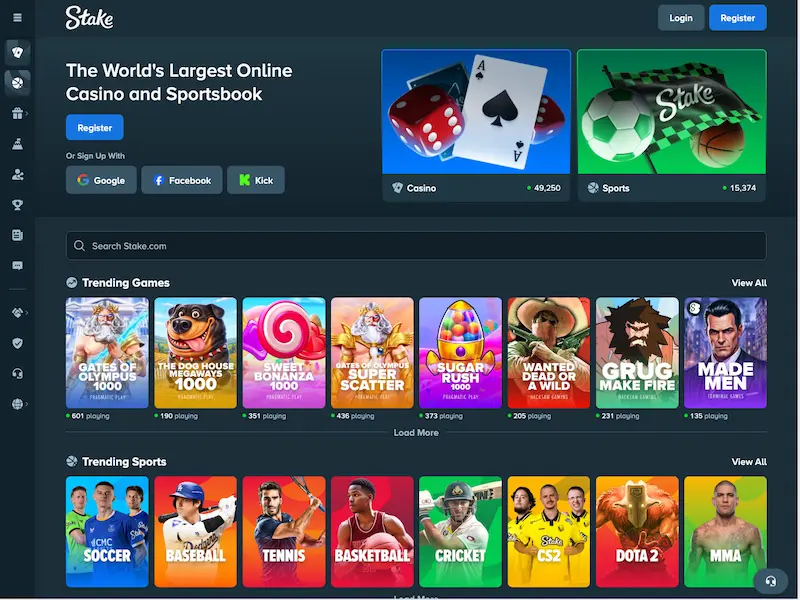
3. Stake.us – Best Sweepstakes Poker Alternative
Stake.us offers a different way to play online poker by using a sweepstakes model instead of traditional real-money gaming. That makes it available in many states where regulated online poker doesn’t exist.
Top Features
- Up to 560,000 Gold Coins and $56 Stake Cash welcome package
- Sweepstakes model with redeemable Stake Cash prizes
- Daily login rewards and regular free Stake Cash promotions
Why Top Pick: Stake.us appeals to players who want poker-style gameplay without using a conventional real-money poker room. Instead of depositing cash directly into poker games, players use Gold Coins for standard play while Stake Cash can be redeemed for eligible prizes. The platform also rewards regular activity with daily bonuses and ongoing promotions, making it easy to keep playing without frequent deposits.
Crypto redemption options are available, with many requests processed in around an hour after approval. While tournament grinders will likely prefer traditional poker sites, Stake.us offers one of the strongest sweepstakes alternatives for casual players.
Other Stats
- Bonus: Up to 560,000 Gold Coins + $56 Stake Cash
- Games: Sweepstakes poker and casino games
- Standout stat: No traditional real-money deposit required to get started
Poker Bonuses Explained
Poker bonuses often look larger than casino bonuses, but they work differently.
Unlike a slot bonus that can become available immediately after meeting wagering requirements, poker bonuses are normally released in small pieces as you generate rake through cash games or tournament fees. The more you play, the more of the bonus becomes available.
Most offshore poker sites offer one of three promotions:
- First-deposit match bonuses, usually between 100% and 150%.
- Freeroll tournament tickets for new players.
- Ongoing rakeback or loyalty rewards for regular play.
A bigger headline bonus isn’t always the better offer. Players who only play occasionally often receive more value from smaller bonuses with easier release requirements than large bonuses that require months of consistent play.
Banking Options and Withdrawal Times
Banking has changed considerably over the past few years, with cryptocurrency becoming the preferred option across most offshore poker sites.
Bitcoin remains the most widely accepted payment method, but Ethereum, Litecoin, USDT, Solana, and several stablecoins are now commonly supported as well. Crypto transactions generally process faster than traditional banking methods and usually involve fewer restrictions.
Typical payout times look like this:
- Bitcoin & Crypto: Instant to 24 hours
- Bank Transfer: Several business days
- Debit/Credit Cards: Availability varies by site
- E-wallets, where available: usually within 24 hours
Many experienced players also prefer crypto because it reduces declined deposits that can occasionally occur with traditional banking methods.
Bankroll Management for Online Poker
The format matters less than the discipline. Cash games, tournaments, and sit-and-gos all reward the same basic rule: don’t play with money earmarked for something else.
A common guideline is keeping at least 20-30 buy-ins for your stake in cash games, and significantly more for tournament play given the variance. That’s a starting point, not a guarantee – bad runs happen regardless of bankroll size.
Set a loss limit before you sit down, not after you’re already stuck. Deciding “I’m done for the day” in the moment, mid-session, is a much harder call to make well than deciding it in advance.
If tracking your sessions starts feeling like something you’re avoiding rather than something you’re doing, that’s worth paying attention to on its own.
Cash Games vs Tournaments: Which Is Better?
There’s no universal answer because each format rewards a different style of play.
Cash games let players buy in, leave whenever they choose, and reload after losing chips. Every chip represents real money, making bankroll management relatively straightforward.
Tournaments require a fixed buy-in and continue until one player holds all the chips. Prize pools are concentrated near the top of the leaderboard, creating larger potential payouts alongside greater variance.
Players looking for consistent sessions often gravitate toward cash games, while those chasing bigger scores generally prefer multi-table tournaments.
Many experienced players split their bankroll between both formats rather than focusing exclusively on one.
Mobile Poker: Can You Play on Your Phone?
Yes. Nearly every major poker site serving US players now supports mobile play.
Some rooms provide dedicated Android applications, while others use browser-based software that runs directly through Chrome or Safari without requiring a download.
The core experience remains largely unchanged. Players can join cash games, register for tournaments, make deposits, request withdrawals, and manage their accounts directly from a smartphone or tablet.
Screen size naturally limits multi-tabling compared with desktop play, but for single-table sessions, modern mobile poker clients perform well.
How to Evaluate Any Online Poker Site (Before You Deposit)
Picking a site by bonus size alone is how most players end up disappointed. Licensing status, payout history, and game-fairness certification tell you more than any welcome offer ever will.
A few things worth checking before you deposit anywhere:
- Licensing and jurisdiction. A site licensed by an established gaming authority (Malta, Curaçao, Isle of Man, Kahnawake, or a US state regulator like Nevada’s) has to meet minimum standards for fund segregation and dispute resolution. No license at all means no real recourse if something goes wrong.
- RNG and game-fairness certification. Reputable sites publish independent audits (eCOGRA, iTech Labs, or similar) confirming shuffle and deal randomness. If a site can’t point to one, that’s a gap worth noting.
- Withdrawal history, not withdrawal promises. Every site claims fast payouts. What matters is whether players report actually receiving funds without runaround. Forums and review aggregators with verified user complaints are more useful here than the site’s own marketing page.
- Customer support responsiveness. Try the live chat before you deposit, not after you have a problem. A slow or scripted response to a simple pre-deposit question is a preview of what happens during a dispute.
Red Flags Worth Walking Away From
No visible licensing information anywhere on the site, withdrawal terms that change after you’ve deposited, bonus terms with unusually high playthrough requirements buried in fine print, or a support team that won’t answer direct questions about your funds.
Final Thoughts
Finding the best online poker site starts with understanding how your state’s rules affect what’s available.
Nevada offers the only fully regulated option among the four states covered here through WSOP.com. California, Florida, and Arizona players instead access real-money games primarily through offshore poker rooms, while sweepstakes platforms provide an additional alternative for players who prefer that model.
Once you’ve narrowed the legal landscape, the decision comes down to game selection, tournament traffic, banking options, bonus value, and how quickly you want access to your winnings. Comparing those factors side by side usually tells you more about a poker site than any advertised welcome offer ever will.
Online Poker FAQ
Is my personal and banking information safe on these sites?
It depends entirely on the operator’s security practices and jurisdiction – encryption standards and data handling vary widely between licensed and unlicensed sites. This is another reason licensing status matters: regulated operators are held to disclosure and security requirements that unregulated ones aren’t.
What happens if a site freezes my account?
Policies vary by operator and are usually spelled out (often vaguely) in the terms of service. Licensed sites typically have a formal dispute or appeals process; offshore and unlicensed sites often don’t, which means a frozen account may have no clear path to resolution.
How does rake work at low stakes versus high stakes?
Rake is usually a percentage of the pot, capped at a maximum amount, and that cap matters more at low stakes than high stakes. A $1 cap on a $20 pot is a much bigger bite proportionally than the same cap on a $200 pot – which is part of why low-stakes online games can feel tougher to beat than the stakes alone would suggest.
Do bonuses actually add value, or do they mostly benefit the site?
Depends on the playthrough requirements. A bonus with a low, clearly stated rake-back requirement can be a real edge. A bonus requiring you to generate rake many multiples of the bonus amount before withdrawal mostly locks your deposit in place rather than adding value – read the terms before counting the bonus as real money.
Does using a VPN make offshore play legal in states without licensed poker?
No – a VPN doesn’t change the underlying legal status of playing on an offshore site from California, Florida, or Arizona. It only affects whether a site can accurately verify your location, which is a separate issue from legality.